What Things Should You Break Out Into Services?

After a previous post I was asked for some examples: what types of things do you take out of your Rails app, especially a new one, to make a new service? For general rules read that post. But for some specifics, this is the post.

#Consulting#Ruby on Rails
Added: 13 Oct 2022
How to Create Custom Scaffold Templates in Ruby on Rails

Ruby on Rails is such a powerful framework. It has its own CLI of which harnesses what are known as "generators". These generators can quickly scale up resou...

#Ruby on Rails
Added: 13 Oct 2022
Ruby on Rails 7 — High-performance frontend with Esbuild, Rollup & Vite

The title is a little misleading but not entirely. Keep reading; it will make sense.

#Javascript#Ruby on Rails
Added: 12 Oct 2022
Rails: How I updated table with 26 million rows

If you ever wondering about updating a rails model with large records(magnitude of millions) this is for you.

#Ruby on Rails
Added: 12 Oct 2022
Use before? and after? Methods When Comparing Dates and Times in Rails

I can’t remember which is greater than or less than either.

#Ruby on Rails
Added: 12 Oct 2022
How Do You Run a Coding Workshop?

A fellow recently asked me for advice about running a Ruby workshop. And folks, I had forgotten I knew so much about it before he asked!

#Consulting#Ruby#Ruby on Rails
Added: 11 Oct 2022
When New CSS Features Collide: Possibility and Complexity at the Intersections by Rachel Andrew

We finally got a proper layout system for the web, and each browser release seems to bring with it another new feature that promises more creative, performant, or intuitive CSS. Each new feature is exciting on its own, but where it gets really interesting is when we combine these things.

#CSS
Added: 11 Oct 2022
The Definitive Guide to Rack for Rails Developers

This article explains pretty much everything you need to know about Rack as a Ruby and Rails developer. We will start with the basics and move to more advanced concepts like middleware and the Rack DSL.

#Ruby
Added: 11 Oct 2022
Kill Your Dependencies | Mike Perham

Ruby, OSS and the Internet

#Ruby
Added: 11 Oct 2022
Fly Reactive Rails 🛫

This post is proudly sponsored by Code & Co. Disclaimer: I’m not affiliated to fly.io at all, this is just a personal account of my experience with it. Fly.io 101 Even though fly is pretty much “Phoenix First” these days (they hired Chris McCord for a reason!), it’s still a very decent way to deploy a Reactive Rails app, as Matt Yorkley has demonstrated here. Let’s go through a quick list of preliminary information before we get started. Docker or Buildpacks? A lot of Rails developers considering Fly as a Platform as a Service these days are accustomed to the Heroku way of deploying apps via git push and Cloud Native Buildpacks that manage the deployment process automatically. While Fly defaults to a Dockerfile builder - and indeed, the Rails setup wizard will generate one for you, as we shall see - you can also use a buildpack builder by specifying a builder and buildpacks in the fly.toml configuration: [build] builder = "heroku/buildpacks:18" buildpacks = ["...", "..."] Also refer to this blog post to select the correct builder (at the moment of writing this would be heroku/buildpacks:18) Free Allowances While Fly has a quite generous stack of free allowances which will let you start and maintain a reasonably sized side-project for free, I would like to specifically point out their free postgres offering, which largely builds on the allowed 3GB of volume storage. Here are a few examples for how to configure it. Bear in mind though that the free compute allowance is summed together for all apps - if you exceed that, you might not be able to keep your whole Rails project free. Getting Started The first thing you’ll want to do, is to install the flyctl CLI (see here) Next, quite obviously, you need to create a Fly account. Run flyctl auth signup, which will in turn open the browser for you. Note that you will have to provide credit card information upfront, because ”here’s what happens if you give people freemium full access to a hosting platform: lots and lots of free VMs mining for cryptocurrencies.” Fair enough from my vantage point. Run flyctl auth login to authenticate against Fly. Now you’re all set up to deploy your first app. Setup Wizard For the remainder of this walkthrough, let’s assume you have a simple Rails app called my-app, and your terminal’s working directory is pointing to the root folder of this app. I’ll start this by a rundown of the official Rails Getting Started tutorial, before I dive into a little more advanced topics. The setup wizard for Rails apps is suprisingly helpful. If you run fly launch it will: Detect a Rails app Ask you to specify your organization and primary region Produce a fly.toml file, which we will look at later Ask whether you would like to set up a Postgresql database right now. If you do that, it will save you the effort of creating and attaching to it manually. This is eminently helpful because it sets up the DATABASE_URL via an application secret right away. It then rattles through the process of preparing your app for deployment. Notice that it is not yet deployed at this stage! Below is a sample output of that command: $ fly launch Creating app in /..... Scanning source code Detected a Rails app ? App Name (leave blank to use an auto-generated name): my-app

#DevOps#Ruby on Rails
Added: 10 Oct 2022
How we built user queueing system for platform issuing COVID-19 passports - Rails, Sidekiq, Redis

Building a platform issuing COVID-19 passports is a very diffcult task especially in terms of security and performance. I am describing the problems we faced working on the application and the solutions we found to successfully release the application in 3 weeks of development time.

#DevOps#Ruby on Rails
Added: 10 Oct 2022
The impact of app development on the bakery and confectionery industry

How can apps help improve the food service industry? We decided to find out using the bakery and confectionery sector as an example. More in the article.

#Consulting
Added: 8 Oct 2022
Turbo 7.2: A guide to Custom Turbo Stream Actions

Marco Roth - marcoroth.dev

#Javascript#Ruby on Rails
Added: 7 Oct 2022
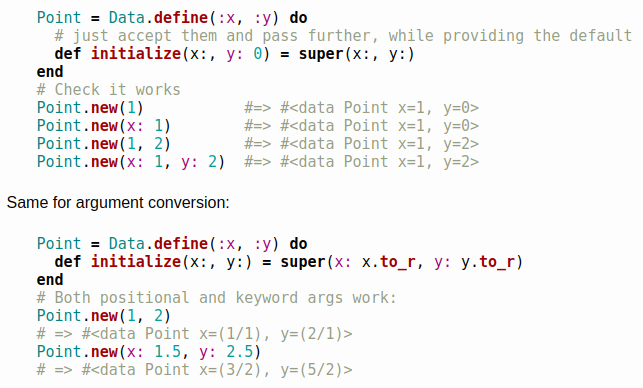
New in Ruby 3.2 - Data.define

Victor Shepelev (Zverok) has just landed an extremely useful feature in Ruby, Data.define. You can...

#Ruby
Added: 6 Oct 2022
The trifecta model: Bringing together engineering, product, and design

Having accountability over different responsibilities is key to cross-functional work. Here's how the trifecta team structure can help.

#Consulting#Soft Skills
Added: 6 Oct 2022
Run multiple Rails apps with Puma-dev

Before joining 37signals I hadn't encountered Puma-dev. This post is a message to past-me who would have benefited from using it to develop a constellation of Ruby on Rails applications. A pretty typical setup for an organisation with a Ruby on Rails monolith is to at some point start breaking it up. Examples of Rails apps that may be ...

#Ruby on Rails
Added: 6 Oct 2022
Security Best Practices for Your Rails Application | AppSignal Blog

Ensure your Rails application stays secure by following some best practices and habits.

#Ruby on Rails
Added: 6 Oct 2022
Dynamic forms with Turbo

Fetch fresh fields from your servers with Turbo Frames.

#HOTWire#Javascript#Ruby on Rails
Added: 6 Oct 2022

Blocks of code in blog posts and articles often contain errors.I see it frequently, in other people’s writing and my own.Code examples are usually not tested...

#Ruby#testing
Added: 5 Oct 2022
How To Architect A Complex Web Table — Smashing Magazine

Tables frequently appear on the web but aren’t easy to design and code. This illustrated guide explains the table anatomy and how to build a table, keeping in mind its future elaboration.

#Design
Added: 5 Oct 2022
Prove Me Wrong (A Reminder to Myself)

Maybe the real treasure was the mistakes I made along the way.

#Consulting#testing
Added: 5 Oct 2022
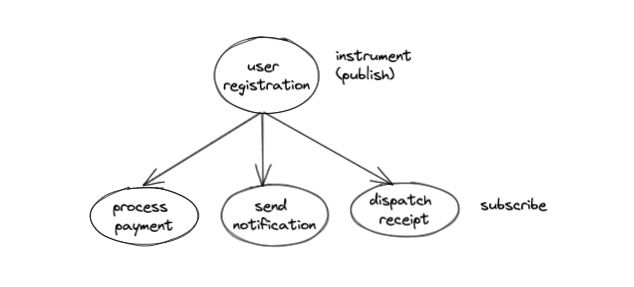
Event Streaming in Rails with Kafka

Original post

#Ruby on Rails
Added: 4 Oct 2022
Rendering Collections in Rails

Partials are a great way to break down complex view into more manageable...

#Ruby on Rails
Added: 4 Oct 2022
Everyone GET in here! Infinite scroll with Rails, Turbo Streams, and Stimulus

Building filterable, instantly updated interactive charts with Ruby on Rails 7, ApexCharts, and StimulusReflex

#Javascript#Ruby on Rails
Added: 4 Oct 2022
Delightful UI Animations With Shared Element Transitions API (Part 1) — Smashing Magazine

Shared Element Transitions API is a game-changing feature that will enable us to create impressive and elaborate UI animations easily. In this article, Adrian Bece will explore its incredible potential by building four real-life examples from scratch.

#CSS#Javascript
Added: 4 Oct 2022
First Previous Next Last